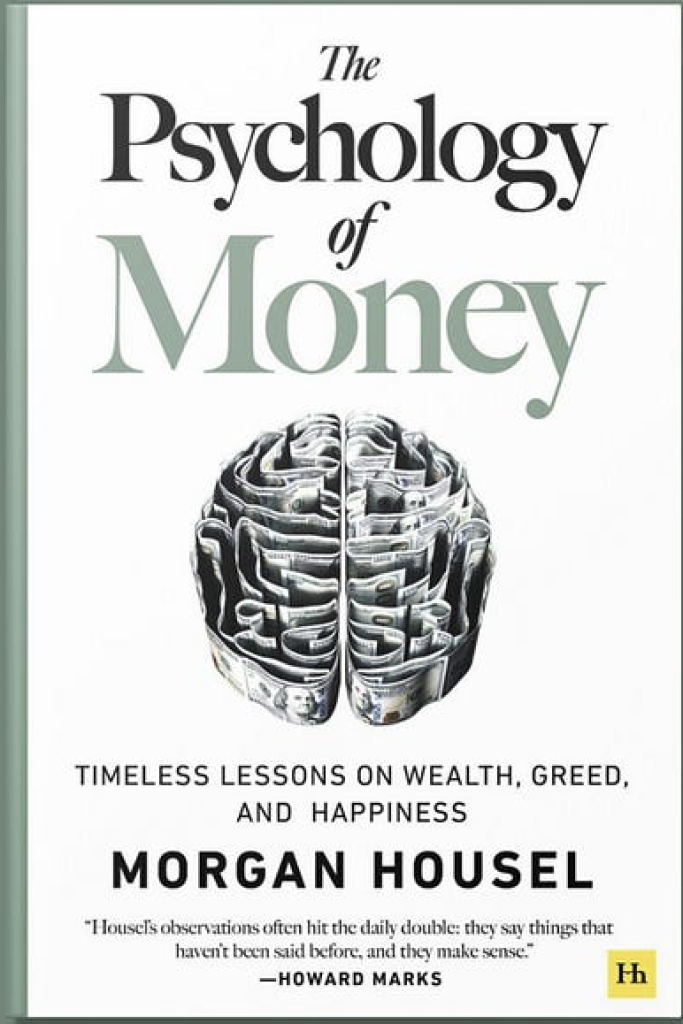
I read the book The Psychology of Money: Timeless lessons on wealth, greed, and happiness alongside a few of my dear friends.
In this book, Morgan Housel examines how people think about, manage, and deal with money. Rather than emphasizing technical aspects, the author explores the behavioral and emotional sides of human beings. Drawing on psychology, historical facts, and personal experiences, he attempts to show that financial success depends more on human behavior, attitudes, and personal values than on intelligence or technical knowledge.
In this book, you won’t find any signs of ready-made solutions or technical and financial advice. My experience reading this book consisted of “learning the core of important problems,” “understanding the dimensions of the issue, especially from a psychological perspective,” and “having my beliefs and past learnings challenged.”
Without giving away any spoilers, let’s look at a few examples together:
- The book explains that being “rich” is different from being “wealthy,” and what you should actually strive for is wealth!
- Elsewhere, the book explains a concept called “enough,” emphasizing that what constitutes “enough” is entirely personal. It then explores how this concept can be used to achieve “financial freedom.”
- In another section, the book warns you to watch out for the “You vs. Me” trap. When investment advisors—whether amateur or professional—give advice, they usually have their own circumstances or a specific type of investor in mind. You must be careful, as your situation might be completely different from the people these advisors are targeting.
The Psychology of Money is one of those books that you should re-read every once in a while. More importantly, you can hold discussion and brainstorming sessions for every single chapter, which will undoubtedly spark engaging debates ;).
I am grateful to my dear friends who initiated and gave me the perfect excuse to read this valuable book.
Excerpt:
“People do some crazy things with money. But no one is crazy.”
— Morgan Housel, The Psychology of Money